
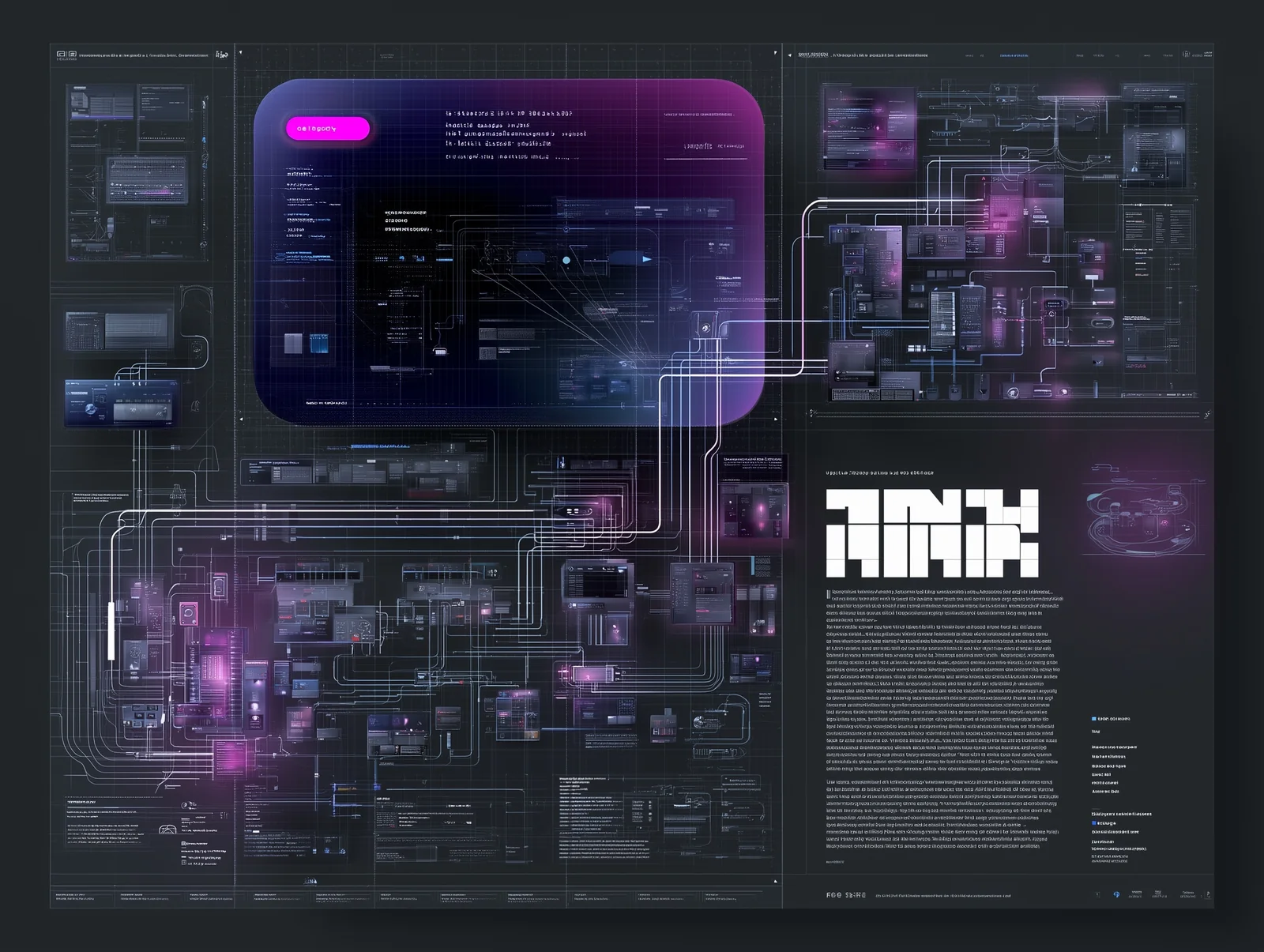
The gap between a beautiful Figma file and shipped React is where most design systems quietly fail. Here is how to close it.
Most design systems look excellent in Figma and fall apart in code. The library is pristine, the components are neatly variant-ed, and then engineering rebuilds all of it slightly differently, spacing drifts, and six months later the design file and the live product no longer agree on anything. The system was never the file. The system is the agreement between design and code, and that agreement is what most teams forget to build.
Start with tokens, not components
The foundation is design tokens: the named values for colour, spacing, type, radius and motion that everything else is built from. When a colour is --accent rather than a hex code copied into forty places, changing it is one edit instead of a scavenger hunt. Tokens are also the shared vocabulary that lets a Figma variable and a CSS custom property mean the same thing. Get this layer right and the rest of the system has somewhere solid to stand.
The mistake is to start with components. A beautiful button built on hard-coded values is a liability, because every future change has to be made by hand in two places. Tokens first, components second.
One component, one source of truth
For each component, decide where truth lives and let nothing contradict it. Usually that means the coded component is canonical and the Figma component documents it, not the other way around. The design file describes variants, states and the accessibility notes; the codebase implements them. When they disagree, code wins, because code is what ships.
A design system that describes the product but does not match it is just expensive fiction.
Bridge the handoff
The Figma-to-React gap closes when handoff stops being a throw-over-the-wall event. That means shared token definitions, components documented with their real props and states rather than just their happy path, and edge cases drawn before an engineer has to guess them. Empty states, error states, loading states and long-content overflow are where systems break, and they are exactly what pretty component sheets tend to omit.
It also means treating the system as living infrastructure with an owner, a changelog and a way to deprecate things cleanly. A system nobody maintains rots faster than no system at all, because people trust it right up until the moment it lies to them.
Why the fidelity matters
High fidelity is not about polish for its own sake. It is about a design system you can actually build from without a translation step that loses information at every pass. When tokens are shared, truth is singular and edge cases are documented, a designer and an engineer can move quickly and independently and still end up with the same product. That is the whole point: not a prettier library, but a faster, more reliable path from intent to shipped interface.